
Ngiraiwet files new lawsuit after court rejects emergency challenge

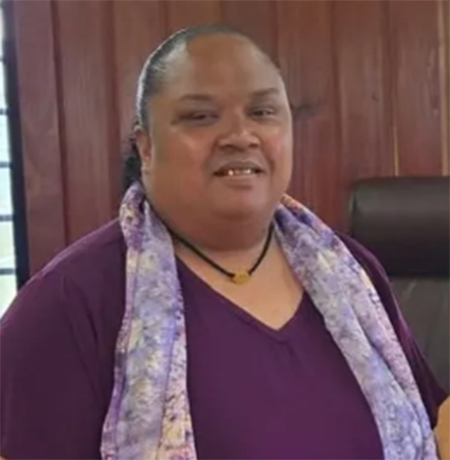
Jennifer Ngiraiwet

By Tia Belau News Staff

You must be logged in and subscribed to view this content.

The complaint follows an October 13 ruling by Associate Justice Peter Huffman that her original lawsuit covered only the first removal attempt. He declined to consider her emergency challenge to the second resolution, saying it required a separate complaint.

The new lawsuit names the Eleventh Kelulul Ngardmau, represented by Speaker Terrence Miozawa, and the Palau Election Commission (PEC) as defendants. It challenges Resolution No. 11-27-2026, adopted on September 16.

Ngiraiwet alleges lawmakers failed to provide an advance copy of the resolution or enough notice and time to consult her lawyer, prepare a response and address the proposed removal.

Lawmakers passed the resolution hours after the Supreme Court’s Appellate Division ruled that constitutional fair-treatment protections apply to legislative investigations leading to impeachment or removal. Those protections include adequate notice and an opportunity to attend the session considering removal.

In rejecting the emergency request, Huffman explained that a motion or sworn statement could not, by itself, add new claims to an existing lawsuit.

Huffman did not rule on the second resolution’s validity and said a separate case would receive expedited consideration.

Represented by attorney Johnson Toribiong, Ngiraiwet asks the court to declare the second resolution unconstitutional and bar officials from using it to remove her, declare the office vacant, or hold the special election.

She also seeks temporary relief while the case is considered.
PWJ, Ngaraard link health screening with healthier eating

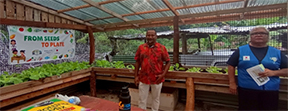
Ngaraard State Governor Sharp Sakuma and Peace Winds Japan (PWJ) Project Coordinator Carlisa Ngedebuu in front of the tabletop gardens in Ngaraard.

By Elilai Rengiil

Peace Winds Japan (PWJ) is working with the Ngaraard State Government to improve diets and strengthen health monitoring through community cookouts, vegetable growing, and a yearlong screening program.

The project, supported by Japan’s grant aid for Japanese NGOs, aims to prevent non-communicable diseases (NCDs) and strengthen community-based follow-up. It began in March 2026 and runs through February 2027.

You must be logged in and subscribed to view this content.

“With support from the state government staff, habit changes in the 21 participants will be observed and monitored until the end of the project,” Ngedebuu said.

“Unlike other health screening projects in Palau, this initiative follows the same participants throughout the year to track changes,” she added.

Vegetables from the PWJ-funded and state government supported greenhouse are used in community cooking and distributed to the screening participants. The vegetables harvested have also been distributed to over 25 homebound patients.

Ngaraard State Government employee Thomas Omisong, who maintains the greenhouse and tends its vegetables, said the project gives community members a healthy activity while teaching them to propagate seeds, transplant seedlings and grow vegetables. A sign in the greenhouse reads, “From Seeds to Plate”.

Two community cookouts have taken place in the past year and introduced healthier recipes while teaching residents how to propagate seeds and plant vegetables. The next cookout is planned for November 13, 3 p.m., at the Ngaraard State Office.

Ngaraard State Governor Sharp Sakuma said the project differs from earlier tabletop gardening initiatives in the state because it includes follow-up, monitoring, and cooking demonstrations.

“Constant follow up is so important,” Sakuma said. He said the greenhouse’s roadside location was chosen to raise community awareness of the project. Sakuma thanked PWJ for its “endless support.”

No residential tabletop gardens have been installed yet. The state supports providing them to the screening participants and selected homebound patients, with approximately 25 to 30 planned.

The state is also considering providing land for community groups, or cheldebechel, from Ngaraard’s five hamlets. Sakuma proposed that each group could grow two different vegetables, potentially providing 10 varieties for the community.

Ngaraard is one of three pilot states, alongside Ngchesar and Ngeremlengui participating in the project. The project builds on PWJ’s 2022–25 annual health screening initiative. Collected data will be shared with the state government and the Ministry of Health and Human Services (MHHS) after the project ends.

The Embassy of Japan in Palau facilitated the site visit as part of its ODA press tour on October 21, 2026.